Finding the right tool to cut clean, precise holes in foam can streamline DIY projects, upholstery work, and craft designs. This guide highlights five reliable options that handle various foam densities and hole sizes. Each product is evaluated for ease of use, durability, and versatility to help you choose the right tool for your project.
| Product | Key Use | Foam Type Compatibility |
|---|---|---|
| Pasimy Foam Cutting Kit | Finger hole cutting, blade options | Soft to medium-density foam |
| Foam Hole Cutter FHC20 (Galaxy) | 1 cut, round holes | Foam ILD 35+ |
| Kaizen Holester Tool | Precise finger holes, depth control | Customizable foam sheets |
| NEIKO 02604A Hole Punch Set | Multiple hole sizes, gasket/foam use | Various materials including foam |
| GOCHANGE 3 in 1 Foam Cutter | Electrical foam cutting, detail work | Low-density foam, EPS, foam boards |
Pasimy Foam Cutting Tool Kit

The Pasimy kit provides a comprehensive set for foam cutting tasks. It includes two long-nose markers, two blade options, a finger hole maker, and ten regular plus ten thin replacement blades. The finger hole maker features a scale display and a rubber grip to help control depth and curvature when creating semi-circular openings for tool placement. This versatility makes it suitable for varied foam thickness and craft requirements, enabling both simple and more detailed cuts.
Foam Hole Cutter FHC20 (Galaxy)

This Galaxy foam cutter is designed to create round holes in foam, with a recommended use for soft materials and foam ILD 35 or higher. It’s compatible with drill bits and features an adjustable barrel for centering and alignment. For safety, it is advised to treat the cutters as non-sharp under normal use and to prepare surfaces with silicone spray or WD-40 prior to cutting. The tool is positioned as easy to use for uniform hole sizes and consistent results.
Kaizen Holester Foam Cutter

The Kaizen Holester focuses on precise finger-hole cutting for foam sheets. It features a stainless steel body and an ergonomic rubber handle, designed for durability and comfortable use. To operate, simply press the tool into the foam at the desired location and twist to your chosen depth. The design emphasizes durability and repeatable cuts, making it suitable for customizable foam projects and multi-layer sheet work.
NEIKO 02604A Hole Punch Set
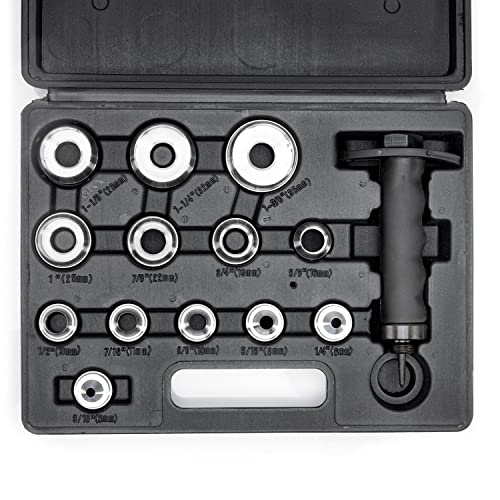
NEIKO’s 14-piece punch kit offers a wide range of hole sizes from 3/16″ to 1-3/8″ (and 5–35mm) and includes a built-in center punch for precise positioning. The set is versatile enough to punch holes in foam, rubber, leather, vinyl, and more. Each punch head threads into a 6″ steel handle with knurled surfaces for secure handling. The combination makes it a practical choice for gasket-like holes and consistent circular cutouts.
GOCHANGE 3 in 1 Foam Cutter

The GOCHANGE electric cutting pen is designed for precision on low-density and soft foam boards, including EPS and similar materials. It offers a fast heating rate and controlled cutting with stainless steel construction to minimize edge fraying. It’s suitable for intricate designs, hole digging, and detailing, with a focus on clean edges and slow, careful operation to avoid excessive heat buildup in the foam.
Galaxy Foam Hole Cutter 1-1/2″ (FHC38)
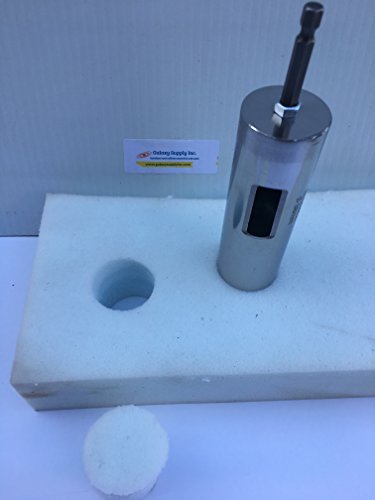
This Galaxy hole cutter is designed for easy, round-hole punching in foam with a 1-1/2″ diameter. It emphasizes safe operation while delivering uniform hole sizes, suitable for upholstery or foam projects that require consistent circular openings. It shares guidance on centering alignment and pre-use lubrication to promote smoother cutting.
Buying Guide: Key Purchase Considerations for Cutting Holes In Foam
- Foam density and type: Choose tools specified for the foam you work with, such as low-density EPS or medium-density upholstery foams, to avoid tearing or ragged edges.
- Hole size range: Consider the maximum and minimum hole diameters the tool supports. Some sets offer multiple punch sizes, while others are optimized for a single diameter.
- Cut precision and depth control: Tools with depth guides, scale displays, or adjustable barrels help achieve consistent results across multiple cuts.
- Tool type and power: Manual cutting tools are simple and quiet, whereas electric cutters can speed up complex patterns but require power and heat management.
- Durability and materials: Stainless steel bodies and hardened blades extend life and maintain sharpness for repeated use in crafts and upholstery.
- Safety and ergonomics: Look for rubber grips, balanced designs, and safety features to reduce fatigue during longer sessions.
- Maintenance needs: Some tools require lubrication or silicone spray before use, particularly when cutting wet or coated foam surfaces.
- Compatibility with other tasks: If you need to punch holes in multiple materials, choose a versatile kit that includes optional blades or interchangeable heads.
These selections provide a spectrum of options—from compact manual tools to electric cutters—that address common foam hole-cutting tasks. When evaluating which tool to purchase, consider your typical foam density, desired hole sizes, and how often you plan to cut holes. The right tool can improve consistency, reduce waste, and speed up repair or craft projects.