When choosing erosion control blankets, single net straw blankets offer a lightweight, natural option for stabilizing soil and promoting seed germination. This guide highlights five top products that align with the single-net concept or closely resemble it, focusing on biodegradability, ease of installation, and suitability for slopes and seeded areas. Explore practical details, installation notes, and a buyer’s guide to help you compare options and select the best match for your project.
| Product | Brand | Type | Size |
|---|---|---|---|
| American Excelsior QuickGRASS Pro | American Excelsior Company | Jute net erosion blanket | 4′ x 50′ |
| Seven Springs Farms Straw Erosion Blanket | Seven Springs Farms | Double net straw blanket | 4′ x 50′ |
| Sandbaggy Straw Matting Rolls (1 Roll) | Sandbaggy | Double net straw blanket | 4′ x 112′ (450 sq ft) |
| Sandbaggy Straw Matting Rolls (2 Rolls) | Sandbaggy | Double net straw blanket | 4′ x 112′ (900 sq ft total) |
| Sandbaggy Straw Matting Rolls (5 Rolls) | Sandbaggy | Double net straw blanket | 4′ x 112′ (2,250 sq ft total) |
American Excelsior QuickGRASS Pro – 4’x50′ Jute Net Erosion Blanket

The American Excelsior QuickGRASS Pro uses a single durable, natural jute net designed to cling to soil and support seed retention. Made in the USA since 1888, this product emphasizes biodegradability and soil stabilization. The net is built to hold seed and soil in place while blending with the landscape during establishment. Ideal for small to mid-sized projects where a single-net approach is preferred for lightweight coverage and grass or seed germination.
Seven Springs Farms Straw Erosion Blanket – 4′ x 50′

Seven Springs Farms offers a straw-based erosion blanket with a double net construction. This product is 100% long straw and intended for outdoor use, with a focus on moisture retention to aid seed germination. Made in the USA on a family-operated farm, it serves on steeper or newly seeded slopes where enhanced stability and moisture conservation are needed. The double net design increases durability for moderate surface runoff scenarios.
Sandbaggy Double Net Straw Matting – 4 ft x 112 ft (One Roll)
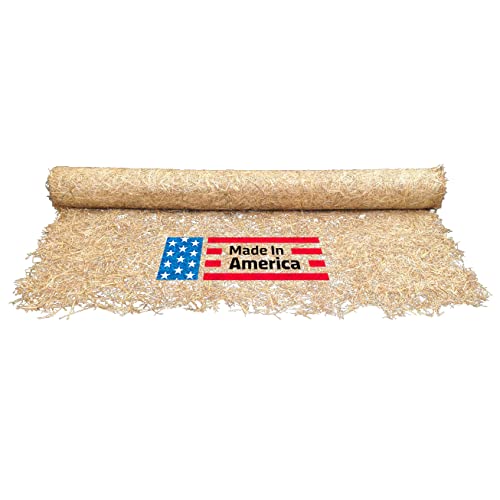
Sandbaggy’s 4 ft by 112 ft blanket uses a double net design to strengthen erosion control on slopes and in moderate flow channels. The straw component absorbs and retains water, promoting soil stabilization and sediment capture. This option is well-suited for projects requiring a longer roll for extended slopes or larger seed beds, with improved durability over single-net blankets.
Sandbaggy Double Net Straw Matting – 4 ft x 112 ft (Two Rolls)
This package provides double net straw blankets across two 4×112 ft rolls, delivering increased coverage for larger projects. The combination of straw matting with a double net structure supports slope stability, sediment trapping, and erosion control across broader areas, while maintaining biodegradability and compatibility with seeded landscapes.
Sandbaggy Double Net Straw Matting – 4 ft x 112 ft (Five Rolls)
The five-roll option extends coverage, ideal for large sites or projects requiring repeat installation along long slopes or channels. The double net construction enhances durability against erosion and provides a robust barrier while supporting seed germination and soil stabilization over substantial areas. Suitable for heavy-duty applications with greater long-term performance requirements.
Buying Guide
Key purchase considerations:
– Net type: Single net blankets feature lighter construction suitable for shallow slopes and smaller seed beds, while double net blankets offer added strength for steeper terrain and higher water flow.
– Material and biodegradability: Biodegradable fibers (such as jute and straw) promote soil recovery after the growing season. Check the availability of locally sourced or USA-made options for reduced environmental impact.
– Coverage and roll size: Evaluate slope length and area to determine the number of rolls required. Longer rolls reduce installation time on large projects.
– Seed compatibility: Consider blankets that are designed to support the specific seed mix you plan to establish. Some products advertise moisture retention or germination support.
– Installation considerations: Some blankets include biodegradable components or pins; verify whether metal stakes or pins are included or required for your site conditions.
– Climate and soil conditions: Steeper slopes, heavy rainfall, or high erosion risk may benefit from double net blankets with stronger sediment-trapping capabilities.
– Longevity and maintenance: While these products are temporary stabilization measures, plan for eventual replacement or integration with ongoing revegetation strategies.
– Local regulations: Some regions have guidelines for erosion control materials and installation practices; ensure compliance with applicable codes.
Comparative overview:
– Single net blankets tend to be lighter and easier to handle, ideal for smaller areas and quicker installs with natural fiber aesthetics.
– Double net blankets provide greater durability, better performance on slopes with higher water velocity, and increased resistance to movement.
– For seed establishment, mats with moisture retention and soil-bridging properties help establish vegetation quicker and more evenly.
– Biodegradability aligns with sustainable landscaping goals, reducing environmental footprint after project completion.
Use cases:
– Small residential slopes: Single net jute-based blankets can provide seed protection and erosion control with minimal material weight.
– Lawn-grade slopes and gardens: Double net straw or mixed matting offers robust coverage and longer-lasting stabilization.
– Large construction or landscape projects: Multi-roll packages enable efficient installation across extensive areas, with consistent performance and easier logistics.
Tip for installation:
– Prepare the soil surface by removing debris and grading to create a uniform bed. Anchor blankets using appropriate pins or stakes as recommended by the manufacturer, ensuring edges overlap sufficiently to prevent washout. Water or mulch to support seed germination when required.