Discover a curated selection of vintage-inspired guillotine paper cutters that blend traditional design with solid performance. This guide highlights reliable models, from compact 12-inch trims to larger 24-inch mats, suitable for scrapbooking, photos, crafts, and classroom use. Each pick emphasizes durability, accuracy, and user safety.
| Product | Brand | Cut Length | Sheet Capacity | Notable Feature |
|---|---|---|---|---|
| Swingline Paper Cutter, Guillotine Trimmer, 12″ Cut Length, 10 Sheet Capacity, ClassicCut Lite (9312) | Swingline | 12″ | 10 | Lightweight, easy alignment grid |
| Swingline Paper Trimmer, Guillotine Paper Cutter, 18″ Cut Length, 15 Sheet Capacity, ClassicCut Ingento (1152) | Swingline | 18″ | 15 | Solid maple base, self-sharpening blade |
| Swingline Paper Trimmer, Guillotine Paper Cutter, 24″ Cut Length, 15 Sheet Capacity, ClassicCut Ingento (1162) | Swingline | 24″ | 15 | Large cutting area, durable construction |
| Westcott 12” TrimAir Wood Guillotine Paper Cutter & Paper Trimmer, 30 Sheet (15106) | Westcott | 12″ | 30 | Titanium-bonded blade, wood base |
| Firbon 12″ Guillotine Paper Cutter, Heavy Duty 30-Sheet Capacity Trimmer | Firbon | 12″ | 30 | ABS base, curved high-quality blade |
Swingline ClassicCut Lite 9312 – Compact 12-Inch Cutter
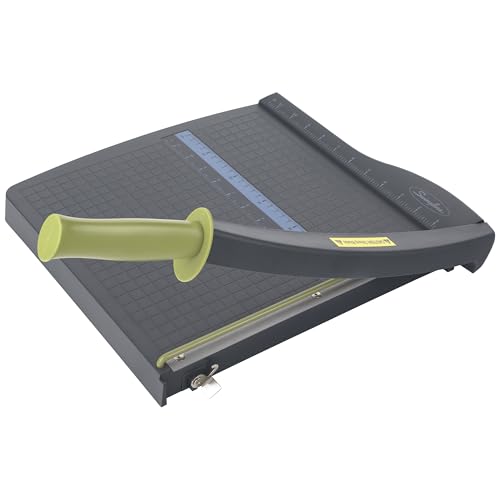
The Swingline ClassicCut Lite 9312 offers a lightweight, user-friendly trimming solution with a sharp guillotine blade and a practical alignment grid. A sturdy plastic base provides dependable stability without adding excessive weight, making it suitable for home offices and classrooms. Its 12-inch cutting length covers most common trimming tasks, while the 10-sheet capacity supports everyday needs such as photos, documents, and craft materials. This model emphasizes portability and straightforward operation, ideal for quick, accurate cuts in smaller projects.
Swingline Ingento 18-Inch Guillotine Trimmer

The Swingline Ingento 18″ Guillotine Trimmer delivers durable performance with a solid maple base, a die-cast metal arm, and a self-sharpening steel blade. The 18-inch cutting length accommodates larger sheets and creative projects, while the 15-sheet capacity supports medium-volume tasks. Its robust construction is designed to withstand frequent use in craft rooms, offices, or art studios. The design prioritizes accuracy with a dependable mechanism and a handle that offers controlled, clean cuts.
Swingline Ingento 24-Inch Guillotine Trimmer

The 24-inch Ingento model expands the workspace for larger layouts without sacrificing precision. Built with a durable maple base, a die-cast metal arm, and a self-sharpening blade, it can handle intricate projects as well as high-volume trimming. With a 15-sheet cutting capacity, this trimmer is well-suited for classrooms, studios, and small print shops that require more room for longer cuts and matboard work.
Westcott 12” TrimAir Wood Guillotine Cutter

The Westcott 12″ TrimAir Wood Guillotine Cutter combines a titanium-bonded blade with a wood base for a premium cutting experience. The blade is three times stronger than standard stainless steel, helping maintain sharpness over time. The wood base adds stability and a classic appearance, while the overall construction supports heavier tasks, including thicker cardstock and photos. This model is positioned for education, scrapbooking, and craft enthusiasts seeking durability and precision.
Firbon 12″ Guillotine Cutter – 30-Sheet Capacity

The Firbon 12″ Guillotine Cutter emphasizes sturdy design with an ABS plastic base for stability and portability. Its high-quality 30Cr13 stainless steel blade features a curved design for sustained sharpness and efficient cutting performance. An adjustable alignment guide and dual measurement scales (inches and centimeters) enhance accuracy, making it suitable for precise trimming in classrooms, studios, and home craft rooms. This model aims to balance durability with a lightweight footprint for everyday use.
Buying Guide: Key Purchase Considerations And Comparisons
- Cutting length: Larger models (18–24 inches) are ideal for long sheets, mats, and posters, while 12-inch trimmers serve most standard tasks. Choose based on typical project size.
- Sheet capacity: For high-volume tasks, prefer models rated at 15 sheets or more. Lower capacities are common for compact, portable cutters.
- Base material and durability: Wood or maple bases tend to be sturdier and offer smoother operation, especially for frequent use. ABS plastic bases provide portability at the cost of long-term rigidity.
- Blade technology: Titanium-bonded or self-sharpening blades deliver longer edge retention. Consider safety features that protect fingers during operation.
- Accuracy features: Alignment grids, adjustable guides, and measurement scales help ensure straight, precise cuts. Dual scales (inches/centimeters) increase versatility.
- Portability vs. stability: Lighter trims are easy to move but may shift on desks; heavier models with clamps or rubber feet stay put during use.
- Safety and guard design: A built-in safety guard and a secure cutting mechanism minimize risk, particularly in educational settings and busy workspaces.
- Material compatibility: If you work with thick cardstock, photos, or matboard, verify the model’s maximum cutting capacity to avoid jams or blade dulling.
- Maintenance considerations: Self-sharpening blades and easy blade replacement reduce downtime and ensure consistent performance over time.
- Budget and purpose: For occasional hobby use, compact models offer value. For classrooms or studios, investing in a heavier-duty cutter with higher capacity may be prudent.
Across these picks, the central trade-offs involve cutting length, capacity, and durability. For light everyday tasks, compact 12″ trimmers with clear alignment grids are efficient and portable. For graphic design projects, photography, or classroom workloads, 18″ to 24″ Ingento models or wood-based systems provide greater working space, robust construction, and higher sheet capacities. Titanium-bonded blades offer longevity, while ABS or wood bases influence stability and weight. Selecting the right model depends on the scale of trimming tasks, the types of materials, and workspace constraints.